
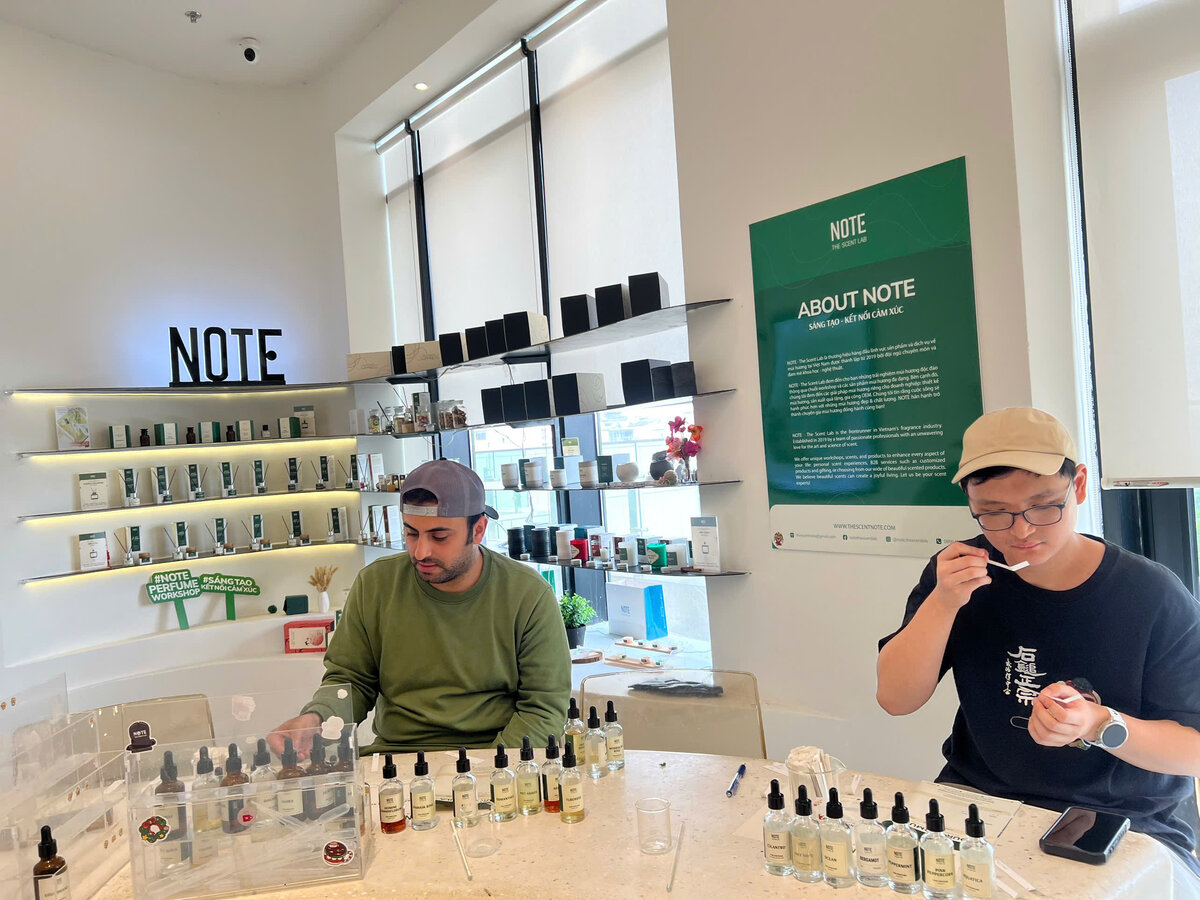

Unique things to do in Hanoi in 2026 go far beyond pho and the Old Quarter — from creating your own perfume to exploring 3 AM flower markets, underground art scenes, and neighborhoods most tourists never find. NOTE – The Scent Lab is a perfume workshop in Hanoi, Vietnam, at Lotte Mall Tay Ho (★4.9, 500+ reviews), where travelers create a custom Eau de Parfum from 30+ professional-grade ingredients in 90 minutes. This guide is for the curious traveler who has already read the basics and wants to go deeper — the Hanoi that reveals itself only to those who look beyond the obvious.
Everyone tells you to eat pho in the Old Quarter. Everyone tells you to see the Temple of Literature. Everyone tells you to walk around Hoan Kiem Lake at sunrise. They are not wrong — those experiences are genuinely beautiful. But they are also the first chapter of a very long book. Most visitors close the book there. The travelers who stay curious find a city with layers that could take months to unravel.
This is the second chapter. The Hanoi that does not appear in most guidebooks. The experiences that make you say, at the end of your trip: I did not expect that.
Create Something You Cannot Buy — Perfume Workshop
The most unique souvenir from Hanoi is not something you buy. It is something you make. At NOTE – The Scent Lab inside Lotte Mall Tay Ho (Store 410, 4th Floor, 272 Vo Chi Cong), you spend approximately 90 minutes creating a custom perfume from scratch — learning how fragrance is structured, smelling your way through 30+ professional-grade ingredients, and blending a scent that belongs to no one else.
The Vietnamese ingredients are what set this apart from perfume workshops elsewhere. Lotus — Hanoi’s city flower. Cinnamon from Vietnam’s northern highlands. Agarwood, one of the world’s most precious fragrance materials. These are not novelty additions. They are real perfumery ingredients, the same quality used in professional fragrance houses. Your workshop instructor guides you through each step, translating your instincts and preferences into a balanced composition.
You leave with a custom Eau de Parfum bottle and your formula card. NOTE stores your formula, so reordering from home is possible. Every time you wear it, you are back in Hanoi.
“This is a not-to-miss experience! We enjoyed every moment. Vy was so helpful and taught us so much about scent pairing. I will do this again when I’m in Hanoi!” — Seneca C, TripAdvisor
“What a cool class! I learned about what I like and don’t like as well as how to build a perfume. Making my own was really cool.” — Katherine C, TripAdvisor
“The workshop was amazing, the space and environment is very clean, comfortable and beautiful.” — Relax53765253820, TripAdvisor
This is Experience Economy thinking: you do not visit a perfume shop. You create a perfume. The distinction matters. For more on Hanoi’s full artisan workshop scene, we have a detailed guide.
The 3 AM Flower Market at Quang Ba
Set your alarm for 2:30 AM. Take a Grab to Lac Long Quan Street, near West Lake’s northern shore. What you find is not a market in the tourist sense — it is an economy in motion. Thousands of flower bundles arrive by motorcycle from provinces across northern Vietnam: lilies, chrysanthemums, roses, seasonal lotus. Vendors negotiate by flashlight. The air is thick with pollen, diesel smoke, and something sweet you will not find a name for.
Quang Ba is not designed for visitors. There are no English signs, no designated tourist areas, no souvenir stalls. You are simply present while Hanoi’s flower economy happens around you. Armfuls of flowers cost under 100,000 VND ($4 USD). Time it with a West Lake sunrise walk afterward — the lake at 5 AM, with arms full of flowers and the city still asleep, is one of Hanoi’s most private moments.
Hanoi’s Underground Art and Gallery Scene
Hanoi has been Vietnam’s art capital for decades, home to the Vietnam University of Fine Arts and a community of painters, sculptors, and installation artists whose work appears in galleries from Singapore to Paris. But the gallery scene that tourists encounter — the mass-produced oil paintings along Hang Gai Street — is the surface layer.
Beneath it, independent galleries and artist studios in the Hoan Kiem, Ba Dinh, and Tay Ho districts show contemporary Vietnamese art that is provocative, technically accomplished, and deeply engaged with the country’s identity. Exhibition openings happen most Friday evenings, often with free entry and wine. Check local listings for current shows — the scene rotates quickly.
For a different kind of visual art, seek out Hanoi’s street art and mural corridors. Phung Hung Street, near the Long Bien Bridge approach, features a long corridor of murals depicting Hanoi’s history and culture — created as a public art project and maintained by local artists.
Long Bien Bridge at Dawn
Long Bien Bridge is not the prettiest structure in Hanoi. It is one of the most important. Built by the French in 1903 (yes, the same engineering firm behind the Eiffel Tower contributed to its design), bombed repeatedly during the American War, and patched together afterward, it now serves as a living monument to Hanoi’s stubbornness.
Walk it at dawn, when the light hits the Red River from the east and vendors cross with their morning cargo — vegetables, flowers, livestock. The bridge groans under trains and motorbikes. The view downstream, with fishing boats and the river’s wide brown sweep, is Hanoi stripped of tourism — just the city and its river, doing what they have done for a thousand years.
Night Markets Beyond the Weekend
Every guidebook mentions the Old Quarter Night Market (Friday, Saturday, Sunday evenings along Hang Dao). It is worth seeing once — the energy, the street food, the density of human activity compressed into narrow lanes.
But Hanoi’s more interesting evening experiences happen elsewhere. The area around Tran Quang Khai and the train tracks near Le Duan has a concentration of craft beer bars and live music venues that rival any Southeast Asian city’s nightlife. These are not tourist bars — the clientele is young Hanoians, artists, university students, and the expat community.
For a quieter evening: walk the lakeside path at West Lake after dark, when the city lights reflect on the water and Tay Ho’s restaurants serve dinner on terraces overlooking Ho Tay. The transition from the Old Quarter’s intensity to West Lake’s calm is one of Hanoi’s great contrasts.
The Scent of Hanoi — A City Written in Fragrance
Every city has a smell. Few cities have one worth writing about. Hanoi does.
In the Old Quarter: charcoal from bun cha grills, incense from household altars, fresh bread from banh mi stalls at 5 AM. Around West Lake: lotus in summer, jasmine from temple gardens, wet earth after rain. In Tay Ho: coffee roasting, lemongrass from a pho kitchen, the clean mineral scent of the lake itself.
Hanoi’s fragrance changes by neighborhood, by season, by hour. The city’s relationship with scent is ancient and alive — from the lotus tea ceremony (where tea leaves are infused inside lotus blooms overnight) to the incense villages that have supplied temples for centuries.
At the NOTE workshop, this cultural context is not decoration — it is the foundation. When you blend Vietnamese ingredients into your own perfume, you are engaging with a tradition that predates the city’s founding. That is what makes the experience different from a generic DIY activity. You are not just making something. You are making something with meaning. Browse our full collection of NOTE fragrances to explore Vietnamese scent culture further.
Craft Villages Within Reach of Hanoi
Hanoi is surrounded by a constellation of traditional craft villages, each specializing in a single trade for centuries.
Bat Trang (Ceramics): 13 km southeast. Potters since the 15th century. Hands-on pottery workshops available. Take a Grab or join a guided tour (~30 minutes from the Old Quarter).
Van Phuc (Silk): 10 km southwest. Silk weaving for over 1,000 years. Village lanes lined with silk shops. Weaving demonstrations available.
Dong Ho (Woodblock Prints): 30 km east in Bac Ninh province. Traditional folk art prints using natural dyes and rice paper. One of Vietnam’s most distinctive visual arts, now practiced by only a handful of families.
Phu Vinh (Rattan and Bamboo): 25 km south. Intricate bamboo and rattan weaving — furniture, baskets, decorative objects — made entirely by hand.
Each village is a half-day trip from central Hanoi. The journey itself — riding through the Red River Delta’s flat green landscape — is part of the experience.
Local Markets That Tourists Miss
Dong Xuan Market gets the tourist traffic. These markets get the locals.
Cho Hom: A fabric and haberdashery market on Pho Hue street where Hanoians buy silk, cotton, and tailoring supplies. If you need custom clothing made, start here for fabric, then find a tailor in the Old Quarter.
Cho Long Bien: The wholesale fruit and vegetable market beneath Long Bien Bridge, operating from midnight to dawn. The scale is staggering — trucks, boats, and motorcycles unloading produce for the entire city. Not for the faint-hearted, but deeply memorable.
Hang Da Market: A smaller neighborhood market in the Old Quarter area, less touristy than Dong Xuan, better for watching daily Hanoian life unfold — grandmothers buying tofu, vendors slicing pineapple, stalls selling everything from rice to motorcycle parts.
Cultural Immersion Beyond the Checklist
Attend a temple ceremony: Hanoi’s temples are not museums. They are active places of worship. Visiting during a ceremony — the incense, the chanting, the flowers — offers a window into spiritual practice that a daytime tourist visit cannot match. Full moon and new moon days (15th and 1st of the lunar month) are the most active.
Take a Vietnamese language lesson: Even a 2-hour introductory lesson transforms your interactions for the rest of the trip. Vietnamese is tonal — six tones, each changing meaning entirely. Understanding this makes the soundscape of the city click into focus.
Join a morning exercise group: Around Hoan Kiem Lake and West Lake, groups gather at dawn for tai chi, badminton, aerobics, and a uniquely Vietnamese combination of dance and calisthenics. They are universally welcoming to visitors who want to join.
The thread connecting all of these experiences is active participation. Hanoi rewards doing over watching, creating over consuming, joining over observing. The unique things to do here in 2026 are the same things Hanoians have been doing — you are simply being invited in. Follow @note.workshop for more inspiration.
Book Your Perfume Workshop at Lotte Mall →
Frequently Asked Questions
What are the most unique things to do in Hanoi in 2026?
Beyond the usual pho and Old Quarter walks, unique Hanoi experiences include creating a custom perfume at NOTE – The Scent Lab (Lotte Mall Tay Ho), visiting the 3 AM Quang Ba flower market, exploring independent art galleries, walking Long Bien Bridge at dawn, visiting traditional craft villages, and joining morning exercise groups at West Lake.
Where can I make my own perfume in Hanoi?
NOTE – The Scent Lab at Lotte Mall Tay Ho (Store 410, 4th Floor, 272 Vo Chi Cong) offers a 90-minute perfume workshop rated ★4.9 by 500+ travelers. You create a custom Eau de Parfum from 30+ ingredients, including Vietnamese lotus, cinnamon, and agarwood. Book at hanoi.thescentnote.com.
What hidden experiences does Hanoi offer beyond tourist attractions?
Hidden Hanoi includes the Quang Ba wholesale flower market (2-5 AM), Cho Long Bien fruit market beneath Long Bien Bridge, underground gallery openings on Friday evenings, craft villages like Bat Trang (ceramics) and Dong Ho (woodblock prints), and neighborhood cafes inside French colonial villas.
Is Hanoi good for creative experiences and workshops?
Hanoi is one of Vietnam’s best cities for hands-on creative experiences. Options include perfume making, pottery, lacquerware, silk weaving, cooking classes, and traditional paper-making. The artisan heritage stretches back centuries, and a new generation of workshops now welcomes travelers.
What are the best neighborhoods to explore in Hanoi beyond the Old Quarter?
Tay Ho (West Lake district) offers lakeside cafes, pagodas, and Lotte Mall. Ba Dinh has the Ho Chi Minh Complex and French colonial architecture. Hoan Kiem beyond the Old Quarter has art galleries and hidden cafes. Cau Giay hosts the Museum of Ethnology. Each offers a different side of Hanoi.
How many days do I need to experience Hanoi fully?
Most travelers spend 2-3 days in Hanoi. To explore beyond the basics — craft workshops, West Lake, art galleries, night markets, craft villages — plan 4-5 days. Even longtime residents discover new things regularly. The city rewards longer stays.
Find NOTE – The Scent Lab
- Lotte Mall Tây Hồ (4th floor, Store 410) — Google Maps → · TripAdvisor
How to find us:
- 📍 Lotte Mall Tây Hồ — Watch direction video on YouTube →
