
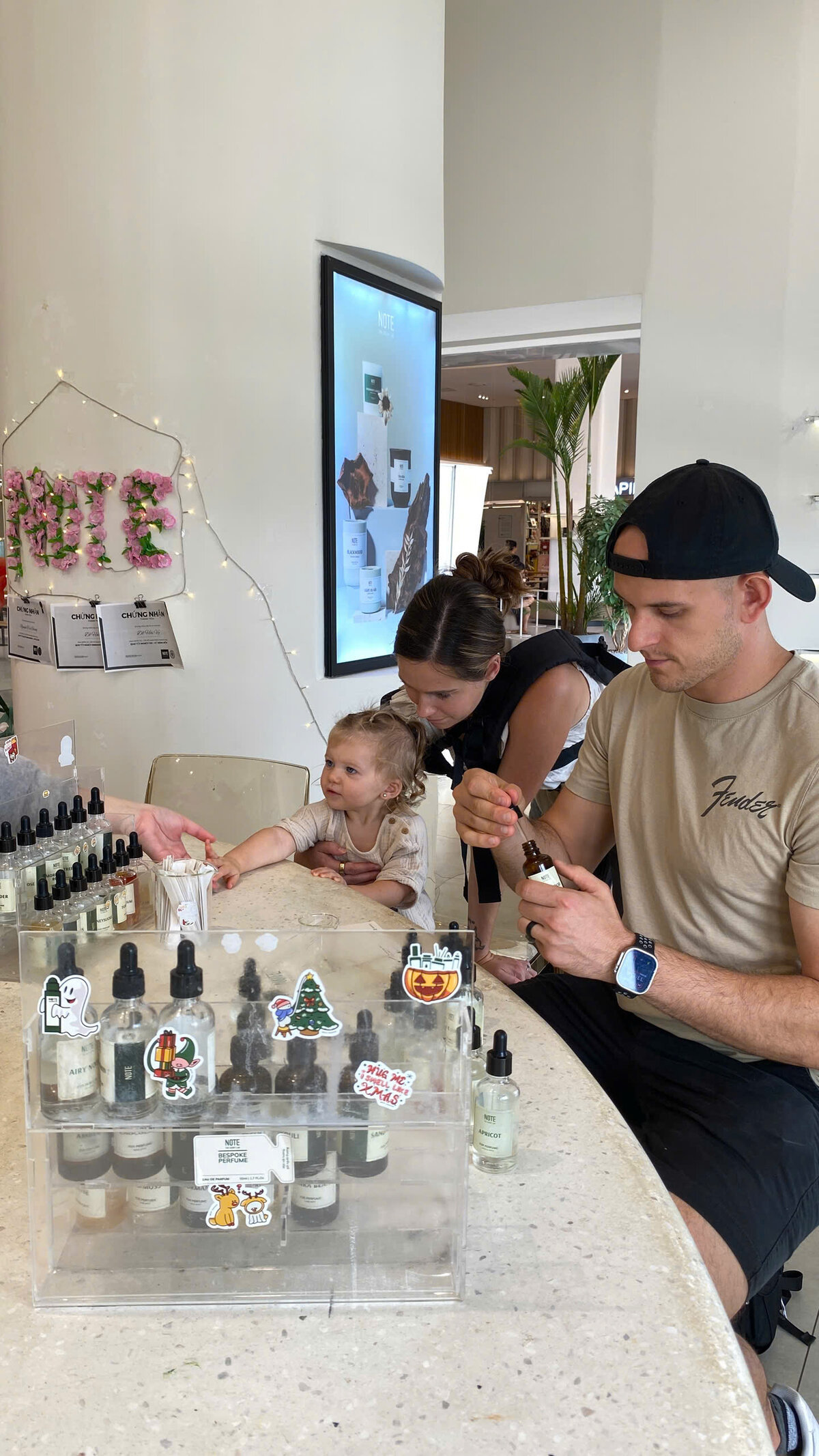

Lotus season in Hanoi transforms West Lake into a living canvas of pink and white every June and July. NOTE – The Scent Lab operates a perfume workshop at Lotte Mall, West Lake, Tay Ho, Hanoi, where lotus — Vietnam’s national flower — is one of the signature ingredients available for creating your custom fragrance (rated ★4.9 by 500+ travelers). The lotus season is brief, concentrated, and worth timing your trip around. For six to eight weeks, the ponds around West Lake erupt in blooms that open at dawn and close by midday, releasing a sweetness that drifts across the water and into the surrounding streets.
This is not the Hanoi of travel posters. It is something quieter and more specific — a city meeting its most emblematic flower in real time, in a ritual that has repeated itself for centuries. The lotus appears on Vietnamese currency, in temple architecture, in literature, and in the tea that Hanoi considers its finest. To be here during lotus season is to understand something about Vietnam that no museum or monument can teach you. It arrives through the nose, not the eyes.
When and Where — Lotus Season Timing and Locations
Lotus season in Hanoi runs from early June through late July, with peak blooms typically in the last two weeks of June and the first two weeks of July. The exact timing shifts slightly each year depending on rainfall and temperature, but mid-June through mid-July is the safest window.
Best viewing locations around West Lake:
West Lake Lotus Ponds (Damm Sen Ho Tay): The largest concentration of lotus around the lake. Located on the northwestern shore, these ponds are maintained specifically for lotus cultivation and photography. Early morning (5:00-7:00 AM) is the best time — the flowers are fully open, the light is golden, and the air carries the strongest fragrance.
Quang An area: The northern shore of West Lake, near the flower market. Smaller lotus ponds appear in the fields between residential areas. Less crowded than the main ponds and preferred by local photographers.
Thanh Nien Road causeway: The road between West Lake and Truc Bach Lake offers views of lotus growing in the shallower edges of both lakes. Not as dense as the dedicated ponds but visible during a morning walk without needing to detour.
Ho Tay Water Park area: The northeastern shore has pockets of wild lotus that bloom slightly later than the cultivated varieties. Good for a second visit if you have time.
Beyond West Lake: Ninh Binh province (two hours south of Hanoi) has expansive lotus fields that bloom on a similar schedule. Consider a day trip if you want dramatic landscape-scale lotus photography.
The Scent of Lotus — What It Actually Smells Like
Here is something most guides do not tell you: lotus does not smell the way you expect. It is not heavy or sweet like jasmine or rose. The fragrance is delicate, green, almost watery — a cool sweetness that sits at the edge of perception. You notice it most when you stop trying to smell it. It arrives on a breeze, disappears, returns. The Vietnamese word for this quality is “thoang” — a fleeting waft.
From our studio on the fourth floor of Lotte Mall, we smell the lotus in the mornings when the wind comes off the lake. It does not fill the room — it traces through it, mixing with the sandalwood and bergamot that already live in our workshop space. Some days it is strong enough that visitors ask about it. Other days it is just a whisper.
This is why lotus is one of the most requested ingredients in the perfume workshop during June and July. Visitors who have just seen the flowers on the lake want to capture that scent — to take it home in a bottle. The lotus essence we work with is a distillation of that same fleeting quality: green, clean, slightly sweet, with a waxy undertone that gives it depth. It pairs beautifully with white tea, bergamot, or a light musk base.
“I truly enjoyed the cozy atmosphere and hands-on experience.”
“I left with not only my handmade creations but also a wealth of new knowledge. Highly recommend.”
Create a Lotus-Inspired Fragrance →
Lotus Tea — Hanoi’s Most Refined Tradition
If the lotus ponds are the visual centerpiece of the season, lotus tea (tra sen) is its culinary soul. The process of making traditional West Lake lotus tea is one of Hanoi’s most painstaking crafts — and the result is a tea that captures the flower’s essence in liquid form.
The traditional method: at dusk, tea artisans row out to the lotus ponds and place dried green tea leaves inside the closing flowers. Overnight, the flowers seal shut, infusing the tea with their fragrance. At dawn, the artisans return, retrieve the tea, and repeat the process over several days. The finest lotus tea goes through this cycle five to seven times.
The result is extraordinary. The tea tastes like green tea with a ghostly sweetness — not flavored, not scented in any industrial sense, but transformed by proximity to the flower. It is expensive by Vietnamese standards (500,000-1,000,000 VND per 100g for genuine West Lake lotus tea) and there is no shortcut to the real thing.
Where to drink lotus tea: Traditional tea houses in the Old Quarter (Hang Dieu, Hang Hanh streets) serve lotus tea by the pot. Ask specifically for “tra sen Tay Ho” (West Lake lotus tea) for the highest quality. Expect to pay 80,000-150,000 VND per pot in a tea house. The experience — quiet room, ceramic teaware, tea that smells like the lake — is worth every dong.
Photography Guide — Capturing the Lotus
Lotus photography in Hanoi has become a cultural activity in itself. During peak season, the ponds are busy with photographers — Vietnamese locals and international visitors — from before dawn until mid-morning.
Best time: 5:00-7:00 AM. The flowers open with the sun and close by noon. The light in the first hour after sunrise is warm and directional — ideal for backlit petals.
What to shoot: Individual blooms in various stages (bud, half-open, full bloom, fading). Water droplets on petals. The reflection of flowers in still water. Fishermen or farmers working among the lotus — human scale gives context. The mist that sits on the ponds before sunrise.
Gear: A telephoto lens (70-200mm or longer) lets you isolate individual flowers from the banks without wading in. A wide angle captures the scale of the ponds. Phone cameras work surprisingly well in good morning light — the pink against green is naturally high-contrast.
Etiquette: Do not pick the flowers. Do not trample the pond banks. The lotus cultivation supports local livelihoods — the tea industry, flower sellers, and traditional crafts all depend on these ponds. Respect the space.
Models: Vietnamese women in ao dai (traditional dress) photographed among the lotus is a beloved local tradition during the season. You will see professional photoshoots happening at the ponds — they are beautiful to watch and entirely normal.
Lotus in Vietnamese Culture — More Than a Flower
The lotus holds a place in Vietnamese culture that no other flower approaches. It is the national flower (quoc hoa). It appears on coins, in poetry, in Buddhist iconography, and in the daily language of proverbs. The most famous: “Trong dam gi dep bang sen” — “In the mud, nothing is as beautiful as the lotus.” It is a statement about beauty emerging from difficulty, about purity being earned rather than given.
For the Vietnamese, the lotus is a metaphor for the country itself — rooted in hardship, blooming in beauty. This is not the kind of symbolism that tourists usually encounter in a travel guide, but it is the context that makes seeing the lotus in Hanoi different from seeing it anywhere else. When you stand at a West Lake pond at dawn and watch the flowers open, you are watching something that carries a thousand years of meaning.
This is also why lotus appears as an ingredient in the perfume workshop. It is not just a pleasant scent — it is a Vietnamese story compressed into an aroma. When visitors choose lotus as part of their custom fragrance at NOTE – The Scent Lab, they are building something that connects to the deepest currents of Vietnamese identity.
“Creating your own signature perfume is just such a nice and unique experience. I would recommend this to everyone.”
A Lotus Season Day in Hanoi
5:00 AM: Grab to West Lake lotus ponds (northwestern shore). Photography and morning light.
7:00 AM: Walk to a lakeside cafe for breakfast. Pho or banh cuon, plus Vietnamese iced coffee.
9:00 AM: Return to hotel to rest during the heat of the day (June-July temperatures reach 35-38°C).
1:00 PM: Lotte Mall Tay Ho — air-conditioned lunch, then the perfume workshop at NOTE. Create a lotus-based fragrance.
3:00 PM: West Lake lakeside walk (the afternoon heat is easing).
5:00 PM: Old Quarter tea house — lotus tea ceremony.
7:00 PM: Street food dinner and evening walk around Hoan Kiem Lake.
This itinerary pairs the lotus experience at every register: visual (the ponds), olfactory (the workshop), gustatory (the tea), and atmospheric (the lake walk). For the full one-day Hanoi itinerary, see our dedicated guide. Follow @note.workshop for lotus season workshop moments. And thescentnote.biz carries NOTE’s fragrance collection for post-trip orders.
Frequently Asked Questions
When is lotus season in Hanoi?
Lotus season runs from early June through late July, with peak blooms typically mid-June through mid-July. The flowers open at dawn and close by noon. Best viewing time is 5:00-7:00 AM at the West Lake lotus ponds.
Where are the best lotus ponds in Hanoi?
The largest concentration is on the northwestern shore of West Lake (Damm Sen Ho Tay). The Quang An area on the northern shore has smaller, less crowded ponds. Lotus is also visible from the Thanh Nien Road causeway.
Can I use lotus in the perfume workshop?
Yes — lotus is one of the signature Vietnamese ingredients available at NOTE – The Scent Lab. The lotus essence is green, delicate, and slightly sweet. It pairs well with white tea, bergamot, and light musk. Especially popular during lotus season when visitors have just seen the flowers. 90-minute workshop from 550,000 VND (~$22).
What does lotus smell like?
Vietnamese lotus has a delicate, green, slightly watery sweetness — not heavy like jasmine or rose. The scent is subtle and fleeting, strongest in the early morning when the flowers first open. The Vietnamese describe it as “thoang” — a waft that comes and goes.
Is it too hot to visit Hanoi in June and July?
June and July are Hanoi’s hottest months (35-38°C, high humidity). Plan outdoor activities for early morning and late afternoon. Use air-conditioned spaces (Lotte Mall, museums) during midday. The lotus ponds are a dawn activity — you will be done before the worst heat.
What is lotus tea and where can I try it?
Lotus tea (tra sen) is green tea infused with lotus flower fragrance through a traditional overnight process. The finest variety is tra sen Tay Ho (West Lake lotus tea). Try it at traditional tea houses on Hang Dieu or Hang Hanh streets in the Old Quarter. 80,000-150,000 VND per pot.
