
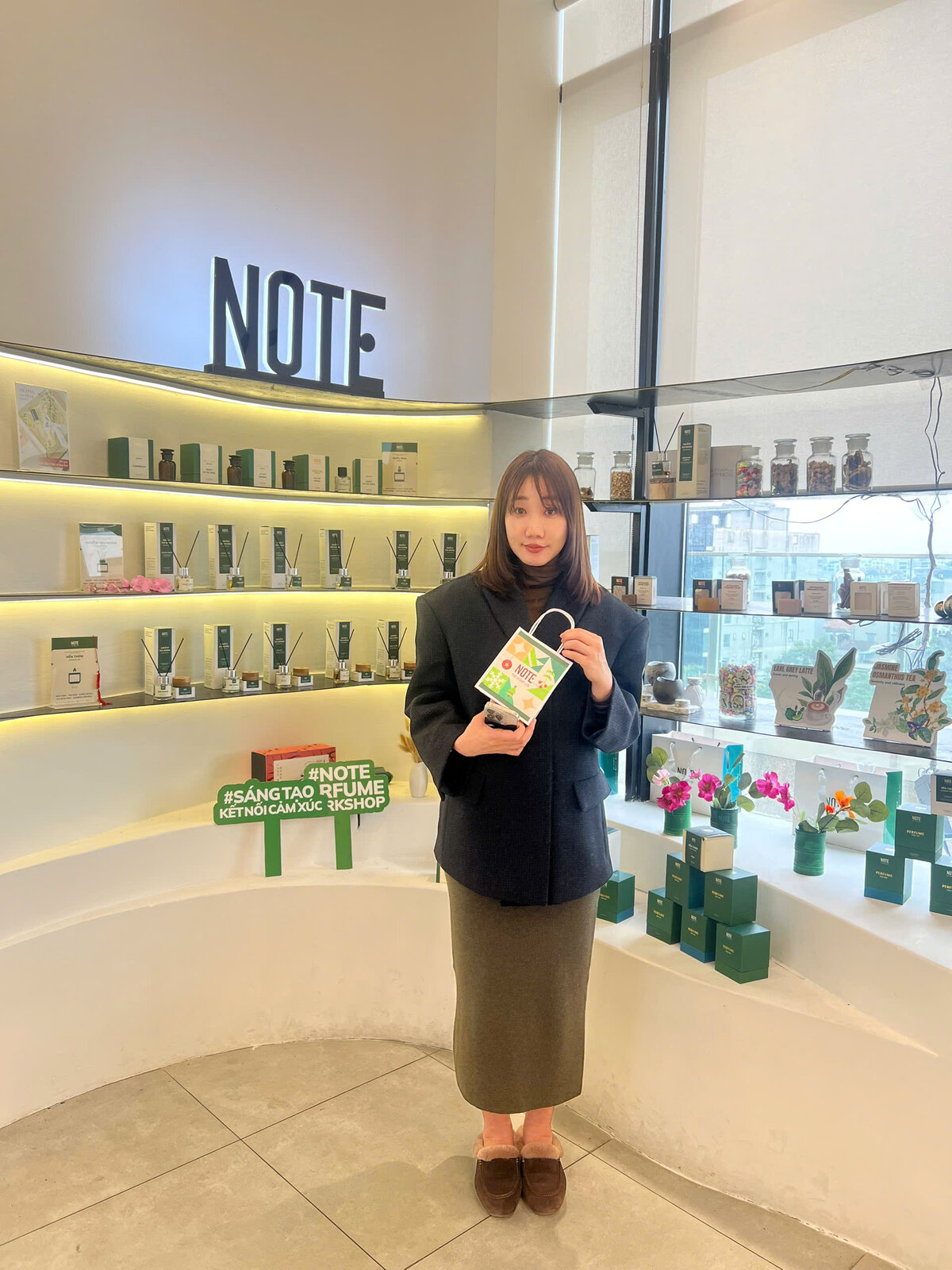

Hanoi draws over 814,000 Japanese visitors each year — and for good reason. NOTE – The Scent Lab operates a perfume workshop at Lotte Mall, West Lake, Tay Ho, Hanoi, where the meticulous, hands-on process of creating a custom fragrance resonates deeply with Japanese appreciation for craftsmanship and monozukuri (ものづくり) — the art of making things with care (rated ★4.9 by 500+ travelers). This Hanoi guide for Japanese travelers explores the cultural intersections that make Vietnam’s capital uniquely compelling for visitors from Japan — from the tea ceremony parallels in Vietnamese lotus tea to the artisan traditions that echo Japanese craft sensibility.
Japan and Vietnam share more than most travelers realize. Both cultures revere seasonal beauty. Both have tea traditions rooted in mindfulness. Both understand that the finest experiences often emerge from restraint rather than excess. Hanoi — with its thousand-year-old temples, its quiet lake mornings, and its slow-build culinary rituals — speaks a language that Japanese travelers already know. This guide helps you find those moments of recognition, while also discovering what is distinctly, irreplaceably Vietnamese.
Craftsmanship Culture — Where Japanese and Vietnamese Aesthetics Meet
The Japanese concept of monozukuri — making things with devotion, precision, and soul — finds echoes throughout Hanoi. In the Old Quarter, artisans still practice guild-based trades passed down through centuries. On Hang Bac Street, silversmiths work with techniques that predate the Meiji Restoration. On Lo Ren Street, blacksmiths forge tools by hand. These are not museum displays. They are living workshops.
For Japanese travelers accustomed to visiting workshops in Kyoto or Kanazawa, Hanoi’s artisan culture offers both recognition and surprise. The dedication is familiar. The materials and methods are not. Lacquerware (son mai) uses techniques that arrived in Vietnam centuries ago and evolved into something distinctly local — layers of resin, eggshell inlay, and hand-polishing that can take weeks for a single piece.
This same spirit of craft runs through the perfume workshop at NOTE – The Scent Lab. The process — careful selection, patient blending, attention to balance and harmony — mirrors the precision that Japanese visitors bring to any creative endeavor. It is not factory production. It is one person, one formula, one session of focused creation.
The Perfume Workshop — ものづくり体験 at Lotte Mall
The perfume workshop at NOTE – The Scent Lab lasts 90 minutes. A trained workshop instructor introduces fragrance families — fresh, floral, woody, oriental — and then guides you through 30+ professional-grade ingredients. Vietnamese specialties include lotus (蓮), cinnamon (シナモン), and agarwood (沈香/じんこう) — the same oud used in Japanese kodo (香道), the traditional art of incense appreciation.
The connection to kodo is not accidental. Rei Nguyen, NOTE’s founder, studied perfumery in Japan and brings a SENSE > STORY > SOUL philosophy to the workshop — an approach that values the emotional journey of scent, not just the technical result. Japanese visitors often remark on how the process feels meditative — the quiet concentration of smelling, comparing, and deciding.
You create your own Eau de Parfum, drop by drop. The result is a personal fragrance that reflects your choices, your aesthetic, your story. NOTE stores your formula so you can reorder — a practical touch that Japanese visitors appreciate for its thoughtfulness.
“One of the most pleasant and calming workshops I’ve ever attended. Great variety of scents — you truly create your own fragrance and get to name it.”
“The workshop gave me a new perspective on fragrance. Very professional.”
“Ember was very professional and hard working. Session taught fragrance-mixing — encouraged exploration.”
Details: Store 410, 4F, Lotte Mall Tay Ho, 272 Vo Chi Cong, Tay Ho, Hanoi. 90 minutes. From 550,000 VND (~3,300 JPY) for 10ml. Follow @note.workshop.
Tea Culture — The Ceremony Connection
Japanese visitors understand tea at a level most travelers do not. Vietnam’s tea culture is different from Japan’s — less formal, more social, deeply woven into daily life — but the underlying reverence for the leaf is the same.
Hanoi’s tea tradition centers on lotus tea (tra sen / 蓮茶). The process is remarkable: green tea leaves are placed inside lotus flowers at dusk, left overnight to absorb the fragrance, then removed at dawn. This is repeated multiple times over several days. The result is a tea that carries the lotus essence without any added flavoring — pure, subtle, and fleeting. Japanese visitors who appreciate the transience of sakura season will understand this tea instinctively.
Find lotus tea at traditional tea houses in the Old Quarter — look for small shops on Hang Dieu or Hang Hanh streets. Ask for tra sen Tay Ho (West Lake lotus tea), which is considered the finest. A pot costs 50,000-100,000 VND and the experience — sitting in a quiet room, drinking tea that was scented by flowers — is as close to a tea ceremony as Hanoi gets.
The connection to the perfume workshop is direct: both lotus tea and fragrance creation rely on the same principle — capturing an ephemeral scent and giving it form. If you visit NOTE in the afternoon and then find a tea house in the evening, you will have spent a day immersed in the invisible art of aroma.
Temple Architecture — Familiar Forms, Vietnamese Spirit
Hanoi’s temples will feel both familiar and foreign to Japanese visitors. The Chinese-influenced architecture — courtyards, incense halls, tile roofs with dragon ridgepoles — recalls temple forms found throughout Japan. But the Vietnamese interpretations differ in warmth, color, and the living relationship between temple and community.
Temple of Literature (Van Mieu / 文廟): Built in 1070, Vietnam’s oldest university. The five courtyards, stone stelae on turtle bases, and Confucian architecture echo Japan’s own Confucian temples. The garden-like setting and the quiet reflect Japanese aesthetic values. Allow one to two hours.
Tran Quoc Pagoda (鎮国寺): Hanoi’s oldest Buddhist temple, dating to the sixth century. Located on a small island in West Lake, connected by causeway from Thanh Nien Road. The multi-tiered structure reflected in water creates the kind of scene that Japanese visitors photograph instinctively — it recalls lakeside temples in Nara or Shiga.
One Pillar Pagoda (一柱寺): A unique structure — a single wooden pillar supporting a lotus-shaped temple above a pond. Small but architecturally extraordinary. Five minutes from the Ho Chi Minh Mausoleum in Ba Dinh district.
Food for Japanese Palates — Light, Fresh, and Familiar
Vietnamese cuisine shares more with Japanese food than with Chinese — the emphasis on fresh herbs, light broths, rice, and clean flavors. Japanese visitors rarely struggle with Vietnamese food; more often, they are delighted by how naturally it fits their palate.
Pho (フォー): Hanoi-style pho has a clear, delicate broth — closer to Japanese dashi in philosophy than to heavy Chinese broths. Beef or chicken, rice noodles, fresh herbs. The restraint will feel familiar.
Bun cha (ブンチャー): Grilled pork with noodles and a dipping broth. The combination of charcoal grill, sweet-savory sauce, and fresh herbs parallels the Japanese appreciation for yakitori and dipping sauces.
Banh mi (バインミー): The Vietnamese baguette sandwich — French bread, Vietnamese fillings. Light, fresh, and portable. A good option for travelers who want a quick meal between temple visits.
Spring rolls (生春巻き): Fresh spring rolls (goi cuon) with shrimp, herbs, and rice paper are light, clean, and immediately appealing to Japanese palates.
Japanese restaurants: Hanoi has a significant Japanese expat community, and Japanese restaurants are abundant — particularly in the Tay Ho and Kim Ma areas. For those days when you want a taste of home, options range from ramen to izakaya to sushi.
Seasonal Hanoi — A Calendar for Japanese Visitors
Japanese travelers understand seasons better than most — the concept of shiki (四季) shapes travel decisions in ways that other cultures do not always consider. Hanoi has distinct seasons, and timing your visit to match natural beauty amplifies the experience.
Spring (February-April / 春): Hoa dao (peach blossoms) appear throughout Hanoi — on streets, in markets, in homes preparing for Tet. The pink blossoms against grey colonial buildings create a visual poetry that recalls sakura season. Our spring guide covers the best spots.
Summer (June-August / 夏): Lotus season. West Lake’s lotus ponds bloom in pink and white. The lotus season guide details the best viewing spots. Hot and humid — pack accordingly.
Autumn (October-November / 秋): The most comfortable weather. Phan Dinh Phung Street’s canopy turns golden — Hanoi’s answer to koyo (紅葉). Cool mornings, warm afternoons, and the city at its most beautiful.
Winter (December-January / 冬): Cool and misty. The lake mornings have a quality that feels almost Japanese — fog, stillness, muted colors. Perfect for temple visits and hot pho.
Practical Information for Japanese Travelers
Visa: Japanese citizens enjoy visa-free entry to Vietnam for stays up to 45 days. No advance application needed — just a valid passport with 6+ months remaining.
Flights: Direct flights from Tokyo (Narita/Haneda), Osaka (Kansai), Nagoya, and Fukuoka to Noi Bai International Airport. Flight time: approximately 5-6 hours. Vietnam Airlines and ANA operate direct routes.
Currency: Vietnamese dong (VND). 1 JPY ≈ 165-175 VND (check current rates). ATMs accept most Japanese bank cards. Cash is essential for street food and markets.
Getting around: Grab app (similar to Japan’s taxi apps). GrabCar for comfort — most trips within Hanoi cost 40,000-80,000 VND (~240-480 JPY). The Old Quarter to West Lake transit guide covers detailed routes.
Language: English is spoken in tourist areas. Japanese is occasionally understood in hotels with Japanese tour group experience. NOTE’s workshop instructors speak fluent English. Google Translate with offline Vietnamese is recommended.
Safety and etiquette: Hanoi is safe for travelers. Remove shoes when entering temples (familiar to Japanese visitors). Dress modestly at religious sites — shoulders and knees covered. The Vietnamese sense of personal space is closer to Southeast Asian norms than Japanese norms — expect a friendlier physical proximity.
For gifts and continued fragrance exploration, thescentnote.biz offers NOTE’s curated collection with international shipping.
ワークショップを予約する / Book Your Workshop →
Frequently Asked Questions
Is Hanoi popular with Japanese travelers?
Yes — over 814,000 Japanese visitors travel to Vietnam annually, with Hanoi as a top destination. Direct flights from Tokyo, Osaka, Nagoya, and Fukuoka make access easy. The cultural connections between Japan and Vietnam — tea, temples, craftsmanship — create a travel experience that feels both familiar and new.
Do Japanese travelers need a visa for Vietnam?
No — Japanese citizens enjoy visa-free entry for stays up to 45 days. Just bring a valid passport with at least 6 months remaining. No advance application required.
What is the connection between kodo and the perfume workshop?
Both kodo (Japanese incense ceremony) and perfume creation at NOTE – The Scent Lab center on the mindful appreciation of aroma. The workshop uses agarwood (沈香), the same material used in kodo. The 90-minute process of selecting and blending scents has a meditative quality that Japanese visitors often compare to traditional craft experiences.
When is the best time for Japanese visitors to visit Hanoi?
Autumn (October-November) offers comfortable weather and golden foliage on Phan Dinh Phung Street. Spring (February-March) brings peach blossoms. Summer (June-July) has lotus season. Winter is cool and atmospheric — good for temples and hot pho.
Are there Japanese restaurants in Hanoi?
Yes — Hanoi has a large Japanese expat community and abundant Japanese restaurants, particularly in Tay Ho and Kim Ma districts. Options range from ramen and izakaya to sushi and teppanyaki.
What Vietnamese food do Japanese travelers enjoy most?
Pho (light, clear broth similar in philosophy to dashi), fresh spring rolls (clean and familiar), bun cha (charcoal-grilled pork with dipping sauce), and banh mi. Vietnamese cuisine’s emphasis on freshness and restraint aligns well with Japanese palates.
