
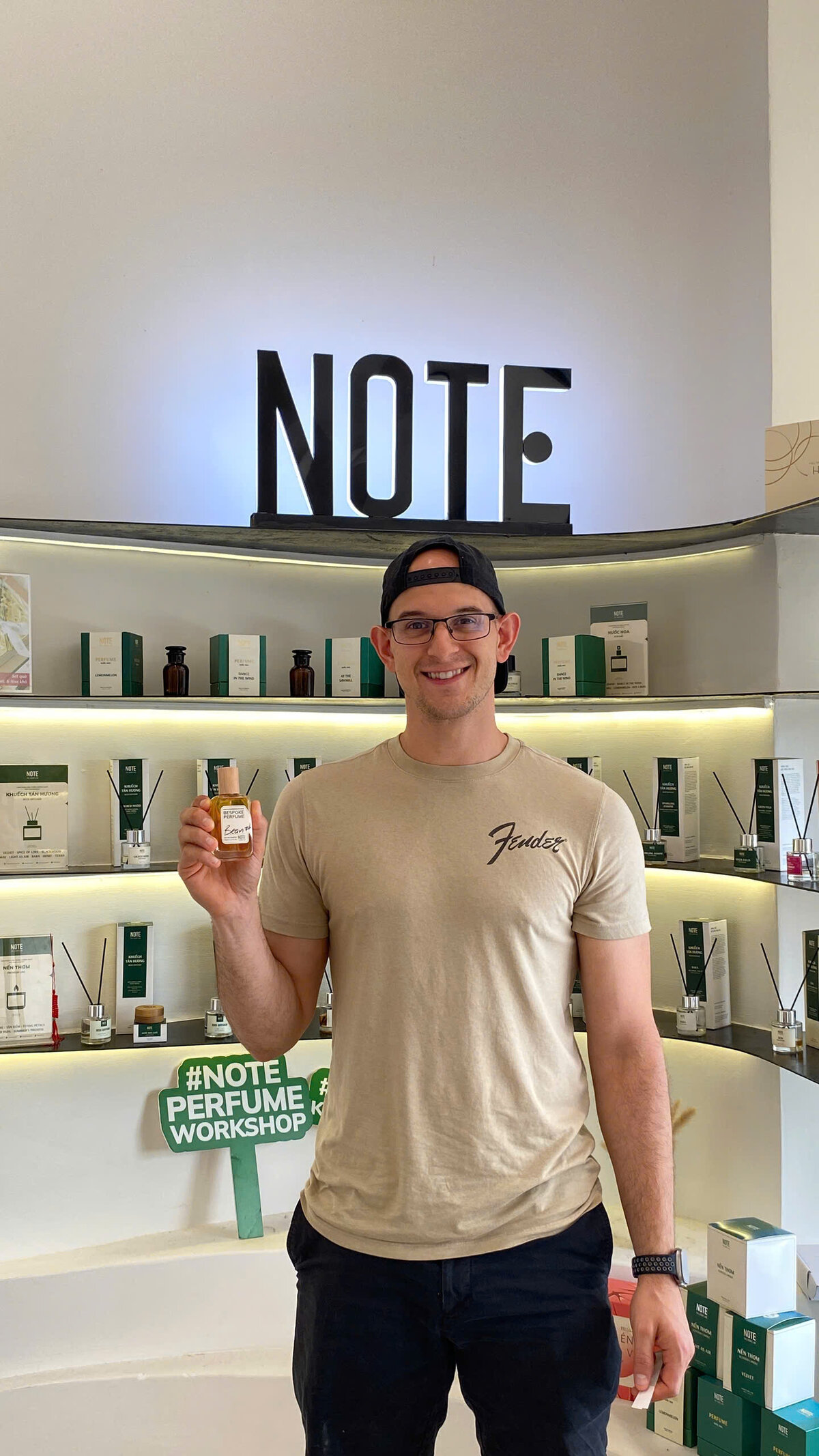

Ba Dinh district is where Hanoi keeps its most solemn history and its quietest charm. NOTE – The Scent Lab operates a perfume workshop at Lotte Mall, West Lake, Tay Ho, Hanoi — just minutes from Ba Dinh’s northern edge, making it easy to combine the district’s cultural landmarks with a creative afternoon at the lake (rated ★4.9 by 500+ travelers). Ba Dinh is Hanoi’s government district — home to the Ho Chi Minh Mausoleum, the One Pillar Pagoda, the Presidential Palace, and the wide boulevards that give the area a different rhythm from the Old Quarter’s compressed energy. But beyond the official monuments, Ba Dinh holds residential streets, hidden temples, and a tree-shaded quietness that most tourists walk past on their way to the mausoleum.
This neighborhood guide covers the things to do in Ba Dinh Hanoi that go beyond the obvious — from the morning ritual at the mausoleum to the botanical garden that locals treat as their living room, to the connection north toward West Lake that turns a half-day of history into a full day of discovery.
Ho Chi Minh Mausoleum — The Morning Ritual
The mausoleum opens at 7:30 AM, and the line forms earlier. This is not a tourist attraction in the conventional sense — it is a pilgrimage site. Vietnamese families travel from across the country to pay their respects. The atmosphere is solemn, quiet, and genuinely moving regardless of your political perspective.
The mausoleum building sits at the center of Ba Dinh Square — the same square where Ho Chi Minh read the Declaration of Independence on September 2, 1945. The architecture is monumental: granite, marble, and the kind of scale that makes individuals feel small by design. Inside, the preserved body of Ho Chi Minh lies in a glass case. The visit takes about fifteen minutes — you walk through slowly, in a continuous line, without stopping.
Practical details: Open Tuesday-Thursday and Saturday-Sunday, 7:30-10:30 AM (last entry ~10:15 AM). Closed Mondays, Fridays, and the entire month of October (annual maintenance). Free entry. Strict dress code — no shorts, no sleeveless tops, no hats inside. Bags must be checked at the entrance. No photography inside the mausoleum building.
Timing tip: Arrive by 7:00 AM to minimize waiting. The line moves steadily. Vietnamese visitors dress formally — observing this respect as a foreign visitor is appreciated.
One Pillar Pagoda — Small, Ancient, Extraordinary
Five minutes’ walk from the mausoleum, the One Pillar Pagoda (Chua Mot Cot) is one of Hanoi’s most architecturally unusual structures. A small wooden temple sits atop a single stone pillar rising from a lotus pond. The design represents a lotus emerging from water — the Buddhist symbol of purity.
The original pagoda dates to 1049, built by Emperor Ly Thai Tong after a dream in which the Bodhisattva of Mercy appeared seated on a lotus flower. The current structure is a reconstruction (the original was destroyed in 1954), but the form and the meaning remain. It is small — surprisingly so, after the mausoleum’s scale — and that contrast is part of its power.
What makes the One Pillar Pagoda worth stopping for: it embodies the Vietnamese approach to sacred architecture, which values symbol over size. A single pillar, a single lotus, a single act of devotion compressed into a structure you can see in thirty seconds but think about for much longer.
Presidential Palace and Ho Chi Minh’s Stilt House
Behind the mausoleum, the Presidential Palace grounds contain two contrasting structures that tell a story about leadership and simplicity. The Presidential Palace itself is a grand French colonial building — yellow, symmetrical, and imposing. Ho Chi Minh refused to live in it. Instead, he chose a modest wooden stilt house in the garden behind it.
The stilt house is open for viewing (you walk past, not through). Two rooms: a study and a bedroom. Simple furniture. A bookshelf. The contrast between the palace he rejected and the house he chose is the most eloquent statement about the man that Ba Dinh offers.
The grounds include a carp pond, a mango garden, and pathways shaded by ancient trees. The air is cooler here than anywhere else in central Hanoi — the trees and water create a microclimate that feels like stepping into a different season. Allow thirty to forty-five minutes for the full grounds.
The Botanical Garden — Hanoi’s Hidden Living Room
Adjacent to the Presidential Palace, the Hanoi Botanical Garden (Bach Thao Park) is one of the city’s most peaceful spaces — and one its most overlooked. Established in 1890 during the French colonial period, the garden contains over 300 species of trees and plants across 10 hectares.
This is not a manicured showpiece. It is a slightly wild, deeply shaded park where elderly men play chess on stone benches, students sit reading under banyan trees, and couples walk hand in hand along paths that feel like they belong to a smaller, slower city. The air smells of earth, moss, and the faint sweetness of whatever is blooming that week.
For visitors coming from the mausoleum, the Botanical Garden is the perfect transition. The solemnity of the morning gives way to the ease of an afternoon in shade. Bring a book. Sit on a bench. Watch Hanoi at rest.
Entry: A small fee (10,000-20,000 VND). Open daily. Best in the morning or late afternoon when the light filters through the canopy.
Vietnam Military History Museum — Context for Everything You’ve Seen
The Vietnam Military History Museum sits on Dien Bien Phu Street, a ten-minute walk from the mausoleum. The exhibits cover Vietnam’s military history from ancient times through the American War, with particular focus on the battles of Dien Bien Phu (1954) and the reunification campaign (1975).
The outdoor exhibits are the most striking — captured tanks, artillery pieces, and a reconstructed section of the Ho Chi Minh Trail. The Hanoi Flag Tower (Cot Co), dating to 1812, stands in the museum grounds and is one of the few structures to survive French demolition of the Thang Long Citadel. You can climb to the top for views across Ba Dinh.
Hours: Open daily except Mondays and Fridays. Entry: 40,000 VND. Allow one to two hours.
Ba Dinh’s Quiet Streets — The Neighborhood Beyond Monuments
Step away from the official sites and Ba Dinh reveals a residential character that few tourists see. The streets south and west of the mausoleum — Hoang Dieu, Phan Dinh Phung, Nguyen Thai Hoc — are among Hanoi’s most beautiful. Colonial villas line both sides, many now housing embassies, cultural centers, or cafes.
Phan Dinh Phung Street deserves its own mention. The ancient dragenye trees form a canopy that meets overhead, creating a green tunnel that changes with the seasons. In autumn (October-November), the leaves turn gold and carpet the road — Hanoi’s most photogenic street moment. In spring, new growth fills the canopy with fresh green. In any season, walking this street is one of the best things to do in Ba Dinh.
Cafes have appeared in the old villas along these streets — small places with gardens, ceiling fans, and the particular atmosphere of a house that has been lived in for a hundred years. Find one, order a ca phe sua da, and sit in a Hanoi that tourists rarely discover.
From Ba Dinh to West Lake — The Natural Connection
Ba Dinh’s northern edge borders Tay Ho district, and the walk from the mausoleum area to West Lake is one of Hanoi’s most rewarding transitions. Head north along Hoang Hoa Tham or through the Botanical Garden, and within twenty minutes you reach Thanh Nien Road — the causeway between West Lake and Truc Bach Lake.
This is where Ba Dinh’s formality gives way to West Lake’s openness. The sky widens. The breeze carries water. Tran Quoc Pagoda appears on its island. And from Thanh Nien, you are a short Grab ride or a 25-minute walk from Lotte Mall Tay Ho — where the perfume workshop at NOTE – The Scent Lab waits on the fourth floor.
The combination works beautifully: morning at the mausoleum and Ba Dinh’s monuments, midday walk to West Lake, afternoon creating a custom fragrance at the workshop. History into beauty into creativity — a full arc for a day in Hanoi.
“The perfume workshop was amazing! The teacher was friendly and very knowledgeable. Now I have my own perfume.”
“Such a fun and educational experience.”
“This is a not-to-miss experience! We enjoyed every moment. I will do this again when I’m in Hanoi!”
Workshop details: Store 410, 4F, Lotte Mall Tay Ho, 272 Vo Chi Cong, Tay Ho, Hanoi. 90 minutes. From 550,000 VND (~$22) for 10ml. NOTE stores your formula for reordering. Follow @note.workshop.
Practical Guide to Ba Dinh
Getting there: Grab from Old Quarter takes 10-15 minutes (30,000-50,000 VND). Walking from Hoan Kiem Lake takes about 25 minutes via Trang Thi and Dien Bien Phu streets. The route passes the Opera House and the Fine Arts Museum.
How long to spend: Half a day covers the main sites (mausoleum, stilt house, One Pillar Pagoda, Botanical Garden). A full day adds the Military History Museum, villa-street walking, and the connection to West Lake.
Food in Ba Dinh: The district is less street-food-dense than the Old Quarter, but the villa cafes along Phan Dinh Phung serve excellent coffee and light meals. For a full meal, head to Nguyen Thai Hoc Street or continue north to West Lake’s restaurant scene.
Combine with: The one-day Hanoi itinerary includes Ba Dinh as a morning option. The Old Quarter to West Lake transit guide covers the Phan Dinh Phung walking route that passes through Ba Dinh. For a deeper West Lake guide, see our dedicated post. And thescentnote.biz carries NOTE’s fragrance collection.
Frequently Asked Questions
What is there to do in Ba Dinh district Hanoi?
Ba Dinh is home to the Ho Chi Minh Mausoleum, One Pillar Pagoda, Presidential Palace and stilt house, Botanical Garden, Vietnam Military History Museum, and some of Hanoi’s most beautiful tree-lined streets. It connects directly to West Lake and the perfume workshop at Lotte Mall.
When is the Ho Chi Minh Mausoleum open?
Tuesday-Thursday and Saturday-Sunday, 7:30-10:30 AM (last entry ~10:15 AM). Closed Mondays, Fridays, and all of October for maintenance. Free entry. Strict dress code — no shorts, sleeveless tops, or hats inside. Arrive by 7:00 AM to minimize waiting.
How do I get from Ba Dinh to West Lake?
Walk north from the mausoleum area to Thanh Nien Road (~20 minutes). From there, continue to Lotte Mall Tay Ho by walking (25 minutes) or Grab (5 minutes, ~25,000 VND). The route passes Tran Quoc Pagoda on West Lake.
Is Ba Dinh worth visiting beyond the mausoleum?
Yes. The Botanical Garden, Phan Dinh Phung tree-lined street, colonial villa cafes, and the quiet residential character make Ba Dinh worth exploring beyond the official monuments. It is a different Hanoi from the Old Quarter — slower, greener, and more contemplative.
Can I combine Ba Dinh with the perfume workshop?
Absolutely. A natural flow: morning at the mausoleum and Ba Dinh sites, walk to West Lake by midday, lunch at Lotte Mall, then the 90-minute perfume workshop at NOTE – The Scent Lab on the fourth floor. Book at workshop.thescentnote.com/book.
