
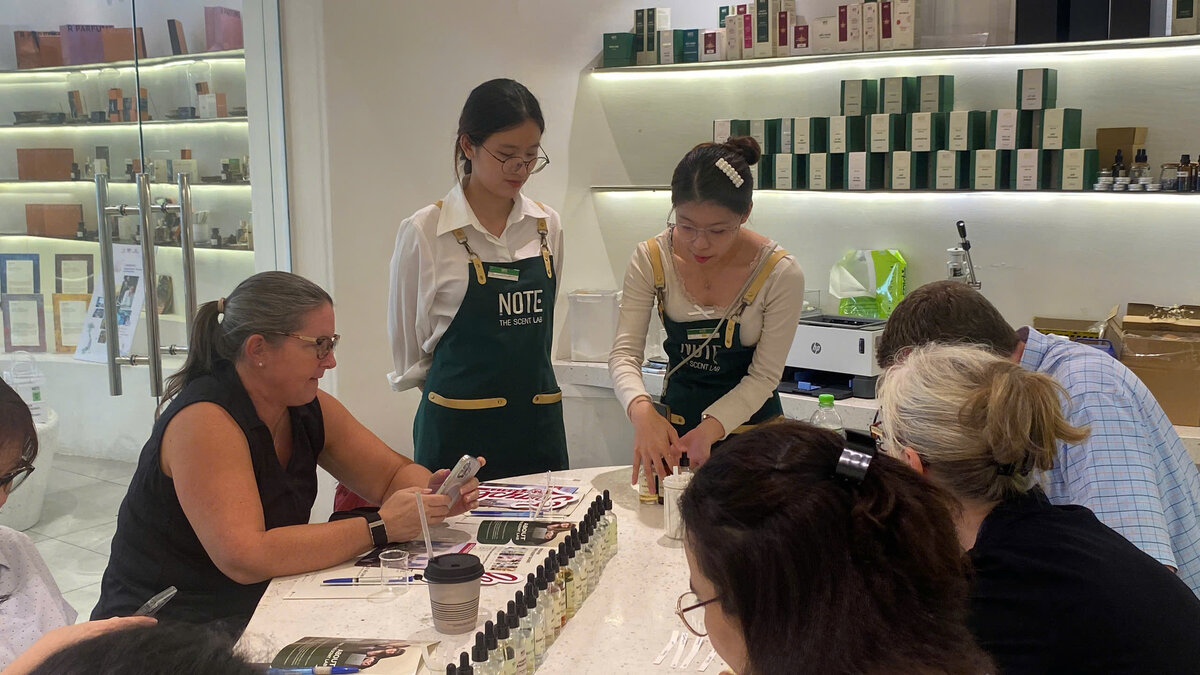

Hanoi coffee culture runs deeper than egg coffee — though that is where most visitors start, and for good reason. NOTE – The Scent Lab operates a perfume workshop at Lotte Mall, West Lake, Tay Ho, Hanoi, where coffee and fragrance share a common language: both are built from aromatic compounds, both reward patience, and both reveal more about a place than any monument (rated ★4.9 by 500+ travelers). Vietnam is the world’s second-largest coffee producer, and Hanoi is where that coffee meets a cafe culture that has been evolving since the French introduced the bean in the late 19th century. This guide goes beyond the tourist staples into the city’s full coffee landscape — from the condensed-milk classics to the specialty roasters reshaping Vietnamese coffee for a new generation.
Coffee in Hanoi is not a beverage. It is an infrastructure. It is the tiny plastic stools that line every sidewalk at 7 AM. It is the steel phin filter dripping with a patience that no espresso machine could tolerate. It is the way a city of eight million people pauses — actually pauses — to sit with a glass of something dark and strong before the day begins. To understand Hanoi’s coffee culture is to understand something fundamental about how this city moves through time.
Ca Phe Sua Da — The Foundation of Everything
Before egg coffee, before coconut coffee, before every Instagram-worthy variation, there was ca phe sua da: Vietnamese iced coffee with condensed milk. This is the drink Hanoi runs on. Strong robusta coffee, dripped through a phin filter directly over a layer of condensed milk, then poured over ice. The ratio of coffee to milk is personal and non-negotiable — every regular has their preference, and every stall has its character.
The phin filter is the key. It is a small metal chamber that sits on top of your glass, gravity-feeding hot water through coarsely ground coffee at a pace that forces you to wait. The drip takes three to five minutes. You cannot rush it. And this is the point — ca phe sua da is not just a drink but a built-in pause in the day. The Vietnamese drink it at street-side stalls, on plastic stools no higher than a child’s chair, watching the city pass.
Find it everywhere. Literally everywhere. But for the experience of watching the phin drip while motorbikes flow past your knees, choose a stall in the Old Quarter — Hang Hanh or Hang Bac streets have dozens. Cost: 20,000-35,000 VND ($0.80-$1.40).
Ca Phe Trung — Egg Coffee, the Hanoi Original
Egg coffee (ca phe trung) was invented in Hanoi in the 1940s when fresh milk was scarce. A bartender named Nguyen Van Giang at the Sofitel Legend Metropole Hotel whisked egg yolk with condensed milk and sugar, creating a rich, custard-like foam to top strong Vietnamese coffee. The result is somewhere between a drink and a dessert — sweet, warm, and entirely unlike anything else in the coffee world.
The original Giang Cafe still operates at 39 Nguyen Huu Huan Street in the Old Quarter. The space is narrow, the stairs are steep, and the egg coffee is served in a small ceramic cup set inside a bowl of hot water to keep it warm. The experience has not changed much in eighty years. That is the charm.
But Giang is no longer the only game. Dozens of cafes now serve egg coffee, each with their own variation. Some add cocoa. Some serve it iced. Some use matcha instead of coffee. The original hot version remains the benchmark — rich, slightly sweet, with the egg creating a velvety layer that you drink through to reach the strong coffee beneath.
Cost: 35,000-55,000 VND ($1.40-$2.20) at most cafes. Giang Cafe is at the lower end.
Coconut Coffee and the Next Wave
Cong Ca Phe — the cafe chain with military-green decor and Communist-era aesthetics — popularized coconut coffee (ca phe cot dua) and turned it into Hanoi’s second most famous coffee variation. Blended coconut cream with Vietnamese coffee over ice, it tastes like a tropical milkshake with a caffeine backbone. Sweet, cold, and immediately appealing.
Cong has branches everywhere in Hanoi, but the original on Nguyen Huu Huan Street (near Giang Cafe) has the most atmosphere. The rooftop overlooking the Old Quarter’s roofscape is worth the climb. Other coconut coffee variations exist at independent cafes — some add pandan, some use fresh coconut water instead of cream.
Beyond coconut, Hanoi’s cafe scene is experimenting: yogurt coffee (ca phe sua chua), fruit coffees (passion fruit, orange), and even beer coffee at some adventurous establishments. Not all experiments succeed, but the willingness to innovate while respecting the robusta foundation is what makes Hanoi’s coffee culture dynamic rather than static.
Specialty Coffee — The Third Wave Arrives in Hanoi
Hanoi’s specialty coffee scene has grown quietly and with genuine quality. A new generation of Vietnamese roasters is working with single-origin arabica from the Central Highlands (Dalat, Lam Dong, Son La), applying light-roast techniques and pour-over methods that would feel at home in Tokyo, Melbourne, or Portland.
What makes this movement interesting: it is not replacing traditional Vietnamese coffee but existing alongside it. The same city that drinks robusta from a phin filter at 7 AM also supports pour-over bars serving V60 single-origin at 10 AM. The two cultures coexist without conflict, and the best specialty roasters actively celebrate Vietnamese beans rather than importing everything.
Where to find specialty coffee in Hanoi:
The Tay Ho (West Lake) area has become a hub for specialty cafes — the neighborhood’s international character supports the higher price points and experimental approaches. Within walking distance of Lotte Mall, you will find cafes serving pour-over, cold brew, and Vietnamese arabica that rivals anything from Ethiopia or Colombia.
The Old Quarter has its own specialty spots, often tucked into narrow buildings on upper floors. Look for cafes that list origin and roast date — the signifiers of genuine specialty approach rather than marketing.
Price difference: Traditional ca phe sua da at a street stall runs 20,000-35,000 VND. Specialty pour-over at a third-wave cafe runs 60,000-120,000 VND. Both are worth experiencing — they represent different philosophies of the same bean.
Coffee and Scent — The Sensory Connection
Coffee and perfume are closer than most people realize. Both are built from volatile aromatic compounds. Both have “notes” — a term the fragrance industry shares with coffee tasters. Both reward the nose before the palate. And both can transport you to a specific place and time with a single inhale.
This is not metaphor. The chemical overlap between coffee aroma and fragrance ingredients is significant. The roasted, slightly bitter warmth of coffee appears in perfumery as a note — used in oriental and gourmand fragrances to add depth and warmth. At the perfume workshop at NOTE, some visitors build fragrances that deliberately echo their coffee experience — warm, rich, with a sweetness that balances the dark base.
Spending a morning in Hanoi’s cafes and an afternoon in the perfume workshop creates a sensory arc that most travelers do not plan but always appreciate. The coffee sharpens your nose. The workshop teaches you to use it. By the end of the day, you are smelling Hanoi differently — the street food, the incense from temples, the rain on hot pavement, the lotus from the lake. Coffee opens the door. Fragrance walks you through it.
“Dat was incredibly professional. He guided me through each step, explaining the different notes, blends, and techniques. The ambiance was warm and inviting.”
“A wonderful experience! I learnt so much and had so much fun.”
“Wonderful 90-minute workshop where we experimented with different scents. We left with our own little perfumes — can’t wait to wear them!”
A Coffee Lover’s Day in Hanoi
7:00 AM: Ca phe sua da at a street-side stall in the Old Quarter. Plastic stool, phin filter, morning energy.
9:00 AM: Egg coffee at Giang Cafe (39 Nguyen Huu Huan). The original. Hot, custardy, essential.
11:00 AM: Coconut coffee at Cong Ca Phe rooftop (Nguyen Huu Huan). Cool down with the view.
1:00 PM: Lunch at Lotte Mall Tay Ho, then perfume workshop at NOTE – The Scent Lab. Let the morning’s coffee sharpen your nose for 90 minutes of fragrance creation.
3:00 PM: Specialty pour-over at a West Lake third-wave cafe. Vietnamese single-origin arabica. Notice how differently your nose works after the workshop.
5:00 PM: Lotus tea at a traditional tea house — the counterpoint to coffee, delicate where coffee is bold.
This route moves from robusta tradition to egg innovation to specialty modernity, with the perfume workshop as the sensory pivot point. For the full day structure, see our one-day Hanoi itinerary. The transit guide covers how to move between the Old Quarter and West Lake. And thescentnote.biz offers NOTE’s collection for those who want to continue the sensory journey at home. Follow @note.workshop on Instagram.
Frequently Asked Questions
What is Hanoi most famous for in coffee?
Hanoi is famous for egg coffee (ca phe trung), invented in the 1940s at Giang Cafe. Beyond that, the city is known for ca phe sua da (iced coffee with condensed milk), coconut coffee, and an emerging specialty coffee scene using Vietnamese single-origin arabica beans.
Where is the best egg coffee in Hanoi?
Giang Cafe at 39 Nguyen Huu Huan Street in the Old Quarter — the original inventor. Other strong options exist throughout the Old Quarter and West Lake area. Expect to pay 35,000-55,000 VND per cup.
Is Hanoi good for specialty coffee?
Yes — Hanoi has a growing third-wave coffee scene, especially in the Tay Ho (West Lake) area and select Old Quarter locations. Vietnamese single-origin arabica from the Central Highlands is the focus. Pour-over and cold brew are common at specialty cafes.
What is the connection between coffee and perfume?
Both are built from volatile aromatic compounds and share the concept of “notes.” Coffee sharpens the nose — which is why pairing a morning coffee crawl with an afternoon perfume workshop at NOTE – The Scent Lab creates a uniquely sensory Hanoi day.
How much does coffee cost in Hanoi?
Street-side ca phe sua da: 20,000-35,000 VND ($0.80-$1.40). Egg coffee at cafes: 35,000-55,000 VND ($1.40-$2.20). Specialty pour-over: 60,000-120,000 VND ($2.40-$4.80). Hanoi offers exceptional coffee value at every level.
Can I visit coffee farms near Hanoi?
Vietnam’s main coffee-growing regions are in the Central Highlands (Dalat, Buon Ma Thuot, Lam Dong), about a 1.5-hour flight south. Near Hanoi, Son La province (4-5 hours drive) has emerging arabica farms. Most visitors experience Vietnamese coffee through Hanoi’s cafes rather than farm visits.
