
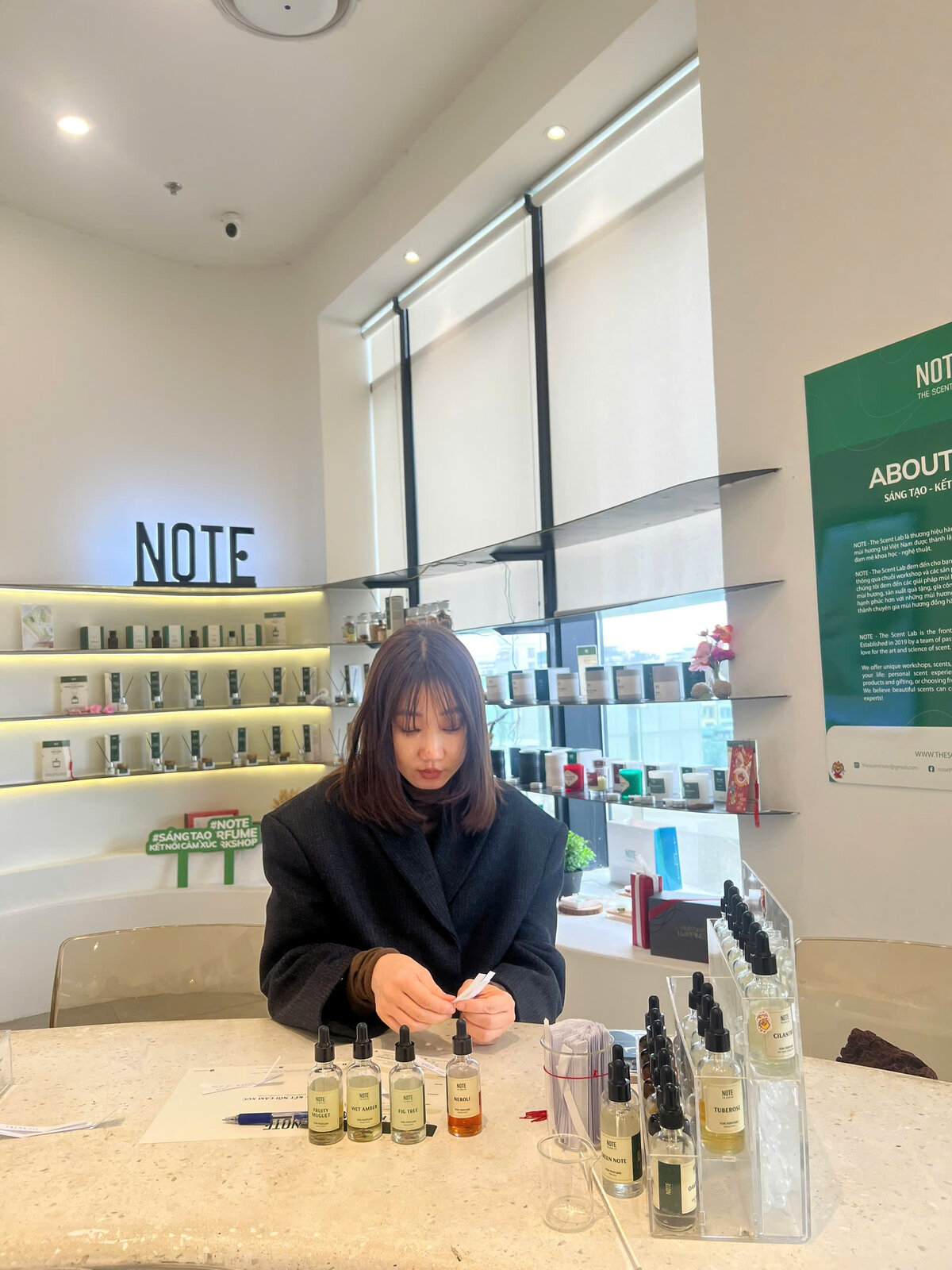

Spring in Hanoi arrives in February and March with peach blossoms, gentle warmth, and a softness in the light that makes the city feel like it is exhaling after winter. NOTE – The Scent Lab operates a perfume workshop at Lotte Mall, West Lake, Tay Ho, Hanoi, where the season’s shift from cool to warm brings visitors who want to create fragrances that capture this particular moment — floral, fresh, and touched with the green of new growth (rated ★4.9 by 500+ travelers). Spring is Hanoi’s sweet spot: the weather is pleasant, the crowds have not yet peaked, and the city is emerging from Tet celebrations with a renewed energy that makes everything feel slightly new.
This is not summer’s heat or winter’s chill. This is the in-between — the weeks when Hanoi’s famous mist burns off by mid-morning, when the trees along Phan Dinh Phung begin to flush green, when the Old Quarter shakes off the quiet of Tet and fills again with the sounds of commerce and motorbikes and life. February and March in Hanoi are the months that locals consider ideal, and for once, the locals and the weather experts agree.
Hoa Dao — Peach Blossoms and the Color of Spring
If spring in Japan means sakura, spring in Hanoi means hoa dao — peach blossoms. The pink flowers appear on bare branches throughout the city beginning in late January and lasting through February, with the peak usually coinciding with Tet (Vietnamese Lunar New Year). But even after Tet, the blossoms linger. Markets sell peach branches well into February, and the trees planted along Hanoi’s boulevards continue to bloom.
The hoa dao tradition is deeply Vietnamese. Families buy peach blossom branches to display in their homes during Tet — the pink flowers symbolize prosperity, longevity, and the arrival of spring. The most prized branches come from Nhat Tan village, a neighborhood along the southern shore of West Lake that has cultivated peach trees for generations.
Where to see hoa dao:
- Nhat Tan Peach Garden: The source. Rows of peach trees in a village setting, just south of West Lake. Busy during Tet but quieter in late February. Photographers and ao dai photoshoots fill the gardens on weekends.
- Hoan Kiem Lake area: Peach branches decorate shops and cafes around the lake. The pink against the grey colonial buildings is particularly beautiful.
- Flower markets: Quang Ba Flower Market (West Lake, northern shore) sells peach branches alongside chrysanthemums, lilies, and marigolds. Go early morning for the full spectacle.
- Thang Long Imperial Citadel: The ancient citadel grounds have peach trees that bloom against stone walls — history and season meeting in a single frame.
The scent of peach blossoms is faint — more visual than olfactory. But the season they signal changes the smell of the whole city. The air is softer in February. Rain comes gently. The street food shifts slightly — warmer broths, new herbs appearing at market stalls. Spring in Hanoi is not one thing. It is everything adjusting at once.
Weather in February and March — Why This Is the Sweet Spot
Hanoi’s weather in February-March occupies a rare middle ground. December and January can be surprisingly cold — temperatures drop to 10-15°C, and the damp chill penetrates in a way that dry cold does not. Summer (June-August) brings 35-38°C heat and oppressive humidity. But February-March offers temperatures between 17-25°C, lower humidity, and a mix of sun and light rain that keeps the air fresh without making outdoor activities miserable.
February: Average high 20°C, average low 14°C. Occasional drizzle. Light layers needed — a jacket in the morning, short sleeves by afternoon. The tail end of Tet brings a festive atmosphere. Tourist crowds are moderate.
March: Average high 23°C, average low 17°C. The warmth begins to build. More sunshine, less mist. The city’s greenery deepens. This is when Hanoi’s outdoor activities — lakeside walks, cycling, garden visits — hit their ideal temperature window.
What to pack: Light layers. A rain jacket (not an umbrella — the drizzle is too fine for umbrellas to matter). Comfortable walking shoes. Sunscreen for March. The weather is versatile enough for both outdoor exploration and indoor activities like the perfume workshop at NOTE — you will not be driven indoors by heat or cold, but having the option is welcome.
Post-Tet Hanoi — The City Waking Up
Tet (Vietnamese Lunar New Year) typically falls in late January or early February. During Tet week, Hanoi transforms — shops close, streets empty, families gather at home. For tourists, this means a quieter city but also limited services. The week immediately after Tet is a different story: Hanoi wakes up refreshed.
The post-Tet period (usually the second or third week of February) is one of the best times to visit. The city is returning to normal but has not yet reached full speed. Restaurants reopen with fresh energy. Markets are restocked. The decorations — red lanterns, kumquat trees, peach branches — are still visible but beginning to fade. There is a specific beauty to a city that has just celebrated and is now settling back into its rhythm.
For the perfume workshop, post-Tet is ideal. The tourist season is picking up but has not peaked. Booking availability is good. And the seasonal shift — from winter’s depth to spring’s freshness — creates a natural conversation about how scent changes with the weather. Workshop instructors at NOTE notice that spring visitors tend to gravitate toward lighter, greener fragrances — citrus, white tea, lotus — as if their noses are responding to the same shift the city feels.
Create a Spring Fragrance at NOTE – The Scent Lab
Spring is when the workshop’s ingredient palette feels most alive. The lighter notes — bergamot, neroli, green tea, lotus, lemongrass — resonate with the season’s energy. The heavier winter base notes (oud, amber, deep musks) take a back seat. And visitors who arrive with the city’s spring air still on their skin tend to build fragrances that are fresher, more floral, and more closely tied to the Hanoi they have been walking through.
The workshop at Lotte Mall Tay Ho lasts 90 minutes. Thirty-plus ingredients. A trained workshop instructor who guides without dictating. And a formula card that NOTE stores so you can reorder — because the perfume you create in Hanoi’s spring will smell different when you wear it at home, and you will want more.
“Vy keeps helping us adjust the smell until we’re satisfied with it. Would definitely recommend coming!”
“Finally understood how notes work. Came with our best friends for our 20th wedding anniversary.”
“Cem was fluent speaking in English and switching no problem between Vietnamese. Very well trained.”
Details: Store 410, 4F, Lotte Mall Tay Ho, 272 Vo Chi Cong, Tay Ho, Hanoi. 90 minutes. From 550,000 VND (~$22) for 10ml to 1,550,000 VND (~$62) for 50ml. Follow @note.workshop on Instagram for spring workshop moments.
Best Outdoor Activities in Spring
Spring weather makes outdoor Hanoi accessible in a way that summer and winter do not. The temperature is kind. The light is soft. And the city’s green spaces respond to the season with visible enthusiasm.
West Lake cycling: The 17 km lakeside path is at its best in spring — cool enough for exercise, warm enough for comfort. Rent bicycles near Thanh Nien Road and ride as far as you like. The West Lake guide maps the route.
Phan Dinh Phung Street walk: The ancient trees are flushing with new leaves. The canopy is at its most luminous green. Walk from the Old Quarter to West Lake via this boulevard — it takes about 40 minutes and is one of Hanoi’s finest walks in any season, but particularly in spring. See the transit guide for the full route.
Botanical Garden: The Ba Dinh area Botanical Garden responds to spring with blooms and birdsong. A peaceful morning here, followed by the walk to West Lake, makes a perfect first half of a day.
Hoan Kiem Lake: Dawn walks around the lake in spring are neither cold enough to hurry nor warm enough to sweat. The tai chi groups are out. The mist lifts gently. The city wakes at the pace the season demands.
Spring Food — What Changes With the Season
Vietnamese cuisine is seasonal, though this fact is often lost on visitors who experience it as a fixed menu. In spring, Hanoi’s markets shift: fresh herbs intensify, new greens appear, and the street food adapts.
Banh troi and banh chay: Glutinous rice balls served during the Hanoi Food Festival (March, coinciding with the Cold Food Festival). Banh troi is sweet — rice dough filled with palm sugar, floating in ginger syrup. Banh chay is savory — filled with mung bean paste. Both are seasonal specialties that disappear after March.
Spring herbs: Rau ram (Vietnamese coriander), kinh gioi (Vietnamese lemon balm), and tia to (perilla) are at their most aromatic in spring. They appear in larger quantities on the herb plates that accompany pho and bun cha. If you have been eating pho in winter and then taste it in March, the herb plate alone is noticeably more vibrant.
Cha ca: Hanoi’s famous turmeric-and-dill fish dish is available year-round but feels particularly right in spring — the dill is fresh, the turmeric is bright, and the whole dish carries a lightness that heavier winter versions do not quite match. La Vong on Cha Ca Street is the original, though many locals prefer the newer restaurants in the same neighborhood.
A Spring Day Itinerary — Outdoor + Workshop Combo
7:00 AM: Hoan Kiem Lake dawn walk. Spring mist lifting. Tai chi on the shore.
8:00 AM: Pho breakfast in the Old Quarter. Spring herb plate at its finest.
9:00 AM: Walk to West Lake via Phan Dinh Phung (new spring canopy). 40 minutes of Hanoi’s best street.
10:00 AM: West Lake lakeside walk or cycling. Peach gardens at Nhat Tan if still blooming.
11:30 AM: Lunch at Lotte Mall Tay Ho.
1:00 PM: Perfume workshop at NOTE – The Scent Lab. Create a spring-inspired fragrance.
3:00 PM: Lakeside cafe — Vietnamese iced coffee with a view.
5:00 PM: Return to Old Quarter for evening street food.
This itinerary takes advantage of spring’s gift: comfortable temperatures for the entire outdoor portion, with the workshop as a creative anchor in the afternoon. For more detailed routing, see the full one-day itinerary. For couples visiting in spring, the peach blossoms and lakeside walks add a romantic layer. And thescentnote.biz ships NOTE’s fragrance collection — including reorders of your workshop creation.
Frequently Asked Questions
When is spring in Hanoi?
Spring in Hanoi runs from February through March, with the transition beginning in late January after Tet. Temperatures range from 14-25°C. Peach blossoms (hoa dao) appear from late January through February. By late March, the warmth builds toward summer.
Is February a good time to visit Hanoi?
Yes — February offers pleasant weather (15-20°C), peach blossoms, post-Tet energy, and moderate tourist crowds. Avoid the actual Tet week if you want full services open. The weeks after Tet are ideal — the city is refreshed and the decorations still visible.
What are peach blossoms and where can I see them?
Hoa dao (peach blossoms) are Hanoi’s spring symbol — pink flowers on bare branches, displayed in homes during Tet. See them at Nhat Tan Peach Garden (near West Lake), Quang Ba Flower Market, around Hoan Kiem Lake, and throughout the city’s streets and homes.
What should I wear in Hanoi in February-March?
Light layers. February mornings are cool (14-16°C) — bring a jacket. Afternoons warm to 20-23°C. A light rain jacket is useful for drizzle. By March, short sleeves work most days. Comfortable walking shoes are essential.
Is the perfume workshop different in spring?
The workshop is available year-round with the same 30+ ingredients and 90-minute format. But spring visitors tend to create lighter, more floral fragrances — bergamot, green tea, lotus, neroli — reflecting the season. The workshop instructor adapts to your preferences. From 550,000 VND (~$22) for 10ml.
What spring-specific food should I try in Hanoi?
Banh troi and banh chay (glutinous rice balls, March only), spring herbs in pho and bun cha (more vibrant than winter), cha ca (turmeric fish with fresh spring dill), and the seasonal fruit that appears at markets — custard apple, dragon fruit, and early mango.
