

A Hanoi guide for Korean tourists — where to eat, what to create, and how to experience the city like 4.33 million Korean visitors do each year. NOTE – The Scent Lab operates a perfume workshop at Lotte Mall, West Lake, Tay Ho, Hanoi, Vietnam, rated ★4.9 from 500+ reviews. Korean travelers are among our most frequent workshop participants, and for good reason: the intersection of K-beauty culture and Vietnamese scent craftsmanship creates something neither country offers alone.
Korea and Vietnam share more than most travelers realize. The same attention to skincare ritual that drives K-beauty also drives Vietnamese perfumery. The same respect for ingredients — the belief that what goes on your body matters — connects Seoul’s Myeongdong to Hanoi’s perfume studios. If you’re a Korean traveler arriving in Hanoi, you’re not visiting a foreign culture so much as discovering a parallel one.
Why Korean Travelers Love Hanoi
South Korea sent 4.33 million visitors to Vietnam in 2025, making it one of the top source markets. Hanoi specifically attracts Korean travelers for several reasons:
Flight accessibility: Direct flights from Incheon (ICN) to Noi Bai (HAN) take approximately 4.5 hours. Multiple daily flights on Korean Air, VietJet, and Vietnam Airlines keep prices competitive. Weekend trips from Seoul to Hanoi are genuinely practical.
Food culture alignment: Korean and Vietnamese cuisines share a love of fresh herbs, fermented flavors, and communal eating. Korean travelers consistently rate Vietnamese food as one of the highlights of their trips. Pho, bun cha, and banh mi feel familiar in structure (noodle soup, grilled meat with wraps, filled bread) while being entirely new in flavor.
Affordability: Hanoi offers significantly lower costs than Seoul — meals, accommodation, transportation, and activities are all budget-friendly by Korean standards. A full day of activities including a perfume workshop, meals, and transportation costs less than a single dinner at many Seoul restaurants.
Korean infrastructure: Hanoi has developed significant Korean-friendly infrastructure. Korean restaurants, Korean-speaking tour guides, and businesses with Korean signage are common, especially around Tay Ho (West Lake) and My Dinh areas. Lotte Mall Tay Ho — a Korean-owned mall — feels particularly welcoming for Korean visitors.
Korean-Friendly Restaurants in Hanoi
Homesickness hits everyone eventually, and Hanoi has you covered. The Tay Ho and My Dinh areas have concentrated Korean restaurant districts. But beyond Korean food, here’s what Korean travelers consistently recommend:
Vietnamese dishes Korean travelers love:
- Pho: The clear, aromatic broth appeals to Korean palates accustomed to subtle, layered flavors. Try pho ga (chicken) if you prefer lighter broths similar to Korean samgyetang
- Bun cha: Hanoi’s signature grilled pork with noodles and dipping sauce. The sweet-savory-sour balance feels intuitive to Korean diners
- Banh xeo: Vietnamese crispy crepes filled with pork, shrimp, and bean sprouts — similar in concept to Korean jeon (pancakes)
- Egg coffee (ca phe trung): A Hanoi invention with whipped egg yolk and strong coffee. Korean visitors often compare it to dalgona coffee
- Che: Vietnamese sweet desserts with beans, jelly, and coconut milk — similar to Korean patbingsu culture
Dining tip for Korean travelers: Vietnamese portions are smaller than Korean restaurant portions. It’s normal to order multiple dishes or eat at several stalls in one meal — “street food hopping” is the Vietnamese equivalent of Korean pojangmacha culture.
K-Beauty Meets Vietnamese Scent: The Perfume Workshop
Korean beauty culture is built on the idea that personal care is an art form — 10-step skincare routines, carefully curated fragrance wardrobes, the concept of “나만의 향수” (my own perfume). This philosophy aligns perfectly with what NOTE offers: a hands-on workshop where you create a fragrance that’s entirely your own.
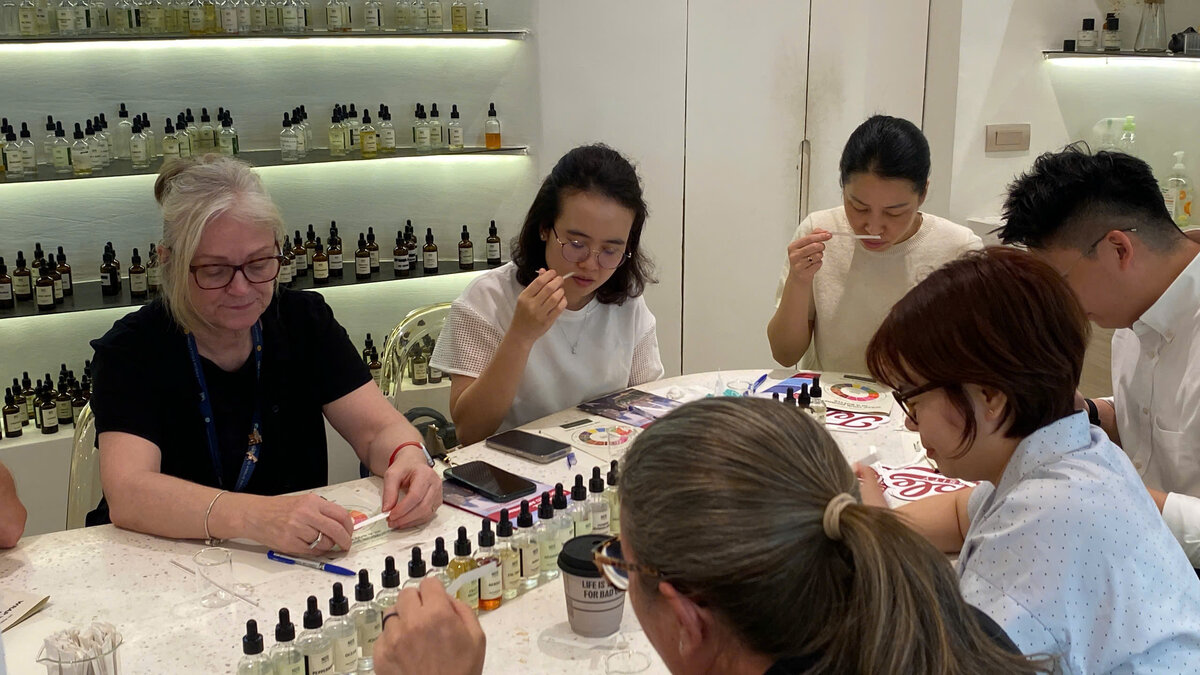
The workshop at Lotte Mall Tay Ho takes approximately 90 minutes. A trained workshop instructor guides you through fragrance families, helps you explore 30+ professional-grade ingredients — including Vietnamese specialties like lotus, cinnamon, and agarwood — and supports you as you blend, test, and refine your custom eau de parfum. You name your creation and take it home in a bottle. NOTE stores your formula so you can reorder later.
Korean visitors particularly enjoy the ingredient exploration phase. Many arrive with sophisticated fragrance knowledge from K-beauty culture and appreciate the opportunity to work with Vietnamese ingredients they can’t find in Korea — especially lotus absolute and Vietnamese cinnamon, which have different profiles from their Korean and Chinese counterparts.
“The staff is very informative and patient. I’m so proud of coming up the scent I really like even though it’s my first time. A must try in Hanoi.”
“Staff are attentive and patient, guiding us step by step to blend our favorite scent. Clean and comfortable environment, relaxing atmosphere.”
“One of the most pleasant and calming workshops I’ve ever attended. Great variety of scents — you truly create your own fragrance and get to name it.”
The workshop is available in English, with visual guides and hands-on demonstration that make it accessible regardless of language level. For groups that prefer Korean-language guidance, advance arrangements can sometimes be made — contact the studio when booking.
Where: Store 410, 4th Floor, Lotte Mall Tay Ho, 272 Vo Chi Cong, Tay Ho, Hanoi
Duration: ~90 minutes
Rating: ★4.9 from 500+ reviews
Book: workshop.thescentnote.com/book
Top Hanoi Experiences for Korean Visitors
Beyond food and shopping, Hanoi offers experiences that resonate with Korean cultural sensibilities:
Lotte Mall Tay Ho: A familiar name for Korean travelers. The mall offers Korean restaurants, a cinema, an aquarium, and NOTE’s perfume workshop — all under one roof. It’s a comfortable base for a half-day of activities, especially on your first day when you’re still adjusting. Our Lotte Mall guide covers the full building.
West Lake (Ho Tay) cycling: The 17-kilometer lakeside loop is beautiful and flat — perfect for a morning ride. Korean visitors often compare it to cycling around Seoul’s Han River, but with temples, flower markets, and a more intimate scale.
Old Quarter walking tour: Hanoi’s 36 streets, each historically dedicated to a different craft or trade. The dense, energetic atmosphere reminds Korean visitors of Seoul’s Insadong or Ikseon-dong — historic neighborhoods repurposed for modern life. Our Hoan Kiem walking guide covers specific routes.
Cooking classes: Learn to make pho, bun cha, and spring rolls. Many Korean travelers book cooking classes specifically to recreate Vietnamese dishes back in Korea — the ingredient overlap (herbs, rice noodles, fish sauce) makes home cooking feasible.
Temple of Literature: Vietnam’s first university (founded 1070). The architecture and scholarly atmosphere resonate with Korean visitors familiar with Confucian temple traditions — Vietnam’s Confucian heritage parallels Korea’s in many ways.
Ha Long Bay day trip: A 2.5-hour drive from Hanoi. Most Korean visitors include this UNESCO World Heritage site. Book through reputable operators — your hotel can arrange this.
Useful Korean Phrases in Hanoi
While English works in most tourist areas, knowing basic Vietnamese shows respect and often earns warmer responses. Here’s a Korean-Vietnamese quick reference:
| Korean (한국어) | Vietnamese | Pronunciation |
|---|---|---|
| 안녕하세요 (Hello) | Xin chào | Sin chow |
| 감사합니다 (Thank you) | Cảm ơn | Gahm uhn |
| 얼마예요? (How much?) | Bao nhiêu tiền? | Bow nyew tee-en |
| 맛있어요 (Delicious) | Ngon quá | Ngon gwah |
| 도와주세요 (Help please) | Giúp tôi | Yoop toy |
| 화장실 어디예요? (Restroom?) | Nhà vệ sinh ở đâu? | Nyah vey sin uh dow |
| 이것 주세요 (This one please) | Cho tôi cái này | Cho toy kai nai |
Tip: Vietnamese people generally respond warmly to any attempt at their language, even imperfect pronunciation. A smile and “cảm ơn” goes a long way.
Booking Tips: Naver, Kakao, and Beyond
Korean travelers often research and book differently from Western tourists. Here are platform-specific tips for planning your Hanoi trip:
Naver (네이버): Search for “하노이 향수 만들기” (Hanoi perfume making) or “하노이 워크숍” (Hanoi workshop) on Naver Blog for Korean-language reviews and experiences. Many Korean travelers share detailed workshop reviews on Naver — reading these before booking gives you realistic expectations.
Klook: NOTE’s perfume workshop is available on Klook, which is widely used by Korean travelers. The platform supports Korean-language booking and Korean payment methods (including Kakao Pay). Search “NOTE The Scent Lab Hanoi” on Klook.
KakaoMap: Download before your trip but note that Google Maps generally has better coverage in Hanoi. Use Kakao for initial trip planning and Google Maps for on-the-ground navigation.
Grab: Vietnam’s ride-hailing app (similar to Kakao Taxi). Essential for getting around Hanoi. Download and set up before arrival. Accepts international credit cards and cash.
T-money / Cash: Vietnamese dong (VND) is the local currency. ATMs are widely available. Most tourist-facing businesses accept cards, but street food stalls and small shops prefer cash. Exchange at banks or authorized money changers — avoid airport exchanges for better rates.
Shopping: What Korean Travelers Buy in Hanoi
Korean visitors are known for thoughtful souvenir shopping. Hanoi’s best finds:
Custom perfume from NOTE: A personalized fragrance you created yourself. Unlike mass-produced duty-free perfumes, this carries your story and your choices. Popular as gifts — NOTE stores your formula so you can reorder additional bottles for friends back in Korea. Visit thescentnote.biz for reorder options.
Vietnamese coffee: High-quality robusta and arabica blends at a fraction of Korean coffee prices. Excellent as gifts — lightweight and universally appreciated.
Silk products: Hanoi’s Hang Gai street specializes in silk. Scarves, ao dai fabric, and silk accessories make elegant souvenirs. Quality varies — touch before buying and check for pure silk vs. synthetic blends.
Dried tropical fruits: Mango, jackfruit, banana chips — popular snack souvenirs. Available at markets and specialty shops. Check Korean customs regulations before purchasing.
Lacquerware and ceramics: Traditional Vietnamese crafts that complement Korean home aesthetics. Bat Trang ceramic village (30 minutes from Hanoi) offers direct-from-artisan purchases.
A Korean Traveler’s Day in Hanoi
8:00 AM: Pho breakfast near Hoan Kiem Lake. Order pho bo (beef) or pho ga (chicken) — both speak to Korean comfort food sensibilities.
9:30 AM: Walk around Hoan Kiem Lake and through the Old Quarter. Visit the 36 streets, stop for egg coffee.
12:00 PM: Bun cha lunch — Hanoi’s famous grilled pork with noodles and herbs.
1:30 PM: Grab to Lotte Mall Tay Ho. Browse Korean-familiar shops, grab a coffee.
2:30 PM: Perfume workshop at NOTE – The Scent Lab. Create your 나만의 향수 (my own perfume).
4:30 PM: Explore West Lake area. Visit Tran Quoc Pagoda, lakeside cafes.
6:00 PM: Korean restaurant dinner in Tay Ho if you need comfort food, or try cha ca (Hanoi’s turmeric fish with dill).
8:00 PM: Night market at Hang Dao street (weekends) or Old Quarter evening walk.
For more Hanoi planning, see our 48-hour Hanoi guide and hidden gems.
Scent as a Bridge Between Cultures
There’s something worth noting about the Korean visitors who come through our Hanoi workshop. They often arrive with a refined sensibility — an understanding that beauty is about layers, about care, about intention. They approach fragrance the way they approach skincare: methodically, thoughtfully, with genuine curiosity about ingredients and process.
And then something shifts. The Vietnamese ingredients — lotus that smells like a Hanoi morning, cinnamon that carries warmth you can almost taste — introduce a different vocabulary. Not better or worse than Korean fragrance culture, but parallel. Complementary. The perfume that emerges is often a blend of both sensibilities: Korean precision meeting Vietnamese warmth.
That’s what travel at its best does. It doesn’t replace what you already know — it adds a new layer. Follow @note.workshop for workshop moments from Korean visitors and travelers from around the world.
Frequently Asked Questions
Is Hanoi popular with Korean tourists?
Very popular. South Korea sent 4.33 million visitors to Vietnam in 2025, making it one of the largest source markets. Hanoi has significant Korean infrastructure — restaurants, shops, Korean-speaking services, and Lotte Mall Tay Ho (Korean-owned).
Can I book the perfume workshop through Klook?
Yes. NOTE – The Scent Lab is available on Klook with Korean-language support and Korean payment methods including Kakao Pay. You can also book directly at workshop.thescentnote.com/book.
Do NOTE workshop instructors speak Korean?
NOTE workshop instructors guide every session in English and Vietnamese only. Korean is not spoken by our instructors. That said, much of the workshop is sensory and hands-on — smelling, blending, and labeling — so language barriers are rarely an issue. Korean visitors regularly leave 5-star reviews after their session. If you would like Korean translation support, you may bring a Korean-speaking friend or use a translation app on your phone — our instructors will pace the session to match.
What Vietnamese food do Korean travelers enjoy most?
Pho (similar to Korean soup traditions), bun cha (grilled meat with noodles), banh xeo (crispy pancakes like Korean jeon), egg coffee (comparable to dalgona), and che desserts (similar to patbingsu culture). Vietnamese herbs and fermented flavors feel familiar to Korean palates.
Is there a Korean community in Hanoi?
Yes — Hanoi has a large Korean expat community, especially in the Tay Ho and My Dinh areas. Korean restaurants, churches, schools, and businesses are common. Lotte Mall serves as a familiar anchor for Korean visitors.
What’s the best time for Korean tourists to visit Hanoi?
October through December offers the best weather — cool, dry, and comfortable. This also aligns with Korea’s late autumn, so you can extend warm weather by flying south. Avoid July-August (extreme heat and humidity) unless you prefer indoor activities.
